Education center
THCA COA Guide
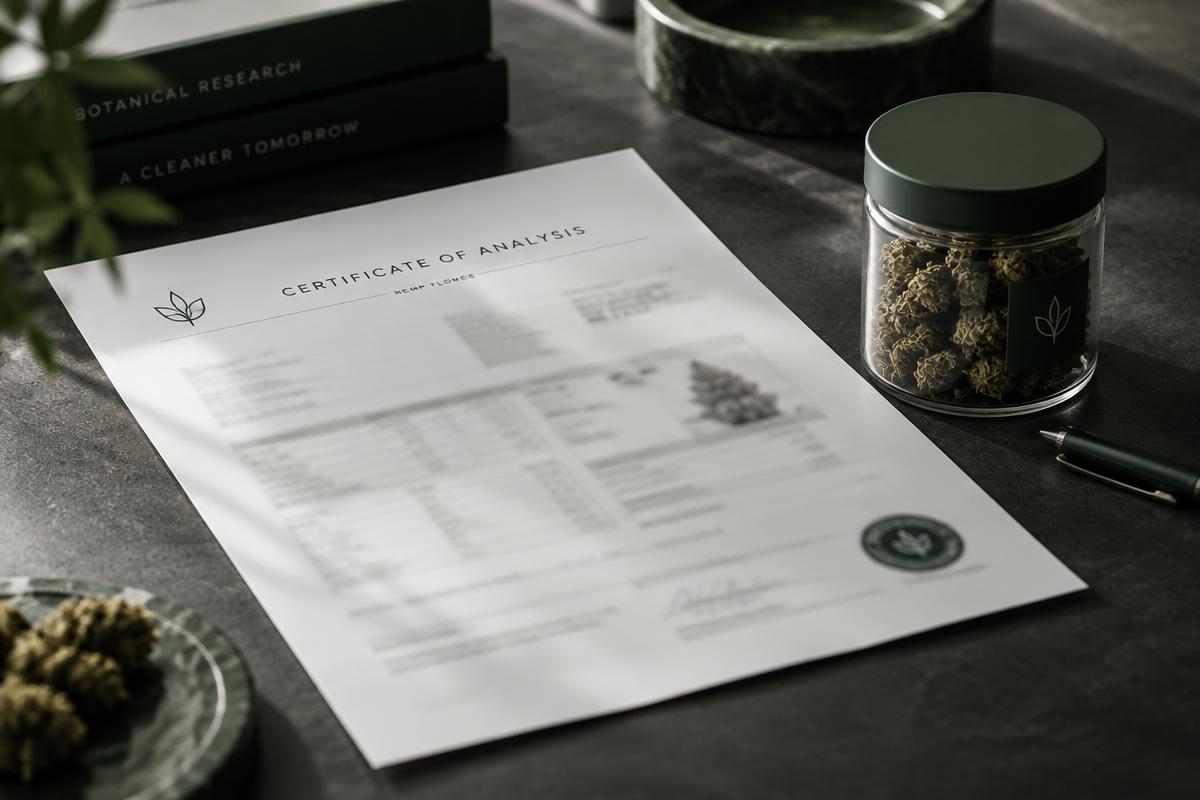
A certificate of analysis is the laboratory document behind a product label. Reviewing the actual report — rather than relying on marketing language — is the most direct way to understand what was tested.
Orientation
What a COA is
A COA reports laboratory results for one sample drawn from one batch. It states who tested it, when, by which methods, and what the results were against any applicable limits.
A report is a snapshot of a sample at a point in time. It does not certify future batches and it does not describe effects or suitability for any person.
We do not perform laboratory testing and we do not verify or certify any product. This page explains how to read the retailer's published report.
Section by section
What each part of the report covers
Cannabinoid testing
Reports the measured concentration of each cannabinoid in the sample, usually as a weight percentage and milligrams per gram. Results under the method's limit are marked ND or below LOQ.
THC and THCA terminology
THCA is the acidic form; delta-9 THC is the neutral form. Many reports also show a calculated total THC figure, commonly delta-9 THC plus 0.877 times THCA.
Pesticides
Screens for pesticide residues against action limits. Each analyte is listed with its result and pass or fail status.
Heavy metals
Typically covers lead, arsenic, cadmium and mercury, reported in parts per billion or million against limits.
Residual solvents
More relevant to extracts than to flower, this panel checks for solvents remaining after processing.
Microbiological testing
Screens for microbial contamination such as certain bacteria and molds, depending on the applicable standard.
Batch and lot numbers
Ties the report to a specific production run. The number on the report should match the number on the package you receive.
Laboratory information
Names the testing laboratory, its location and its accreditation, such as ISO/IEC 17025. Contact details let you verify a report independently.
Testing dates
Date received, date tested and date reported. A recent test date tied to your batch is more informative than an old report for a different lot.
Checklist
Five checks before you order
- 1.Does the batch number on the report match the listing and the package?
- 2.How recent is the test date relative to the harvest?
- 3.Which laboratory issued it, and is accreditation stated?
- 4.Which panels were run — cannabinoids only, or contaminants as well?
- 5.Is the full report published, or only a summary graphic?
Disclosure: This website contains affiliate links. If you purchase through some links on this site, we may earn a commission at no additional cost to you. Read the full disclosure.